
Newsletter platforms now fall into two fairly different camps.
Some are built for the newsletter itself to become the business: you publish, grow an audience, sell subscriptions, and sometimes run sponsorships inside the same ecosystem. Others treat the newsletter as one channel inside a broader marketing system, alongside automation, segmentation, funnels, or product sales.
That distinction matters more than a long feature checklist.
This guide compares seven platforms across both groups: beehiiv, Substack, Ghost, and Buttondown on the newsletter-first side, plus Kit, MailerLite, and GetResponse for creators and businesses that need broader email-marketing capabilities.
We evaluated these platforms using current vendor documentation, public product information, and recurring themes in user feedback. This is not presented as hands-on testing, and we do not use an overall “winner.” The goal is to help you narrow the field based on how you actually plan to use your newsletter.
Quick Decision Guide
Use this as a starting filter rather than a ranking.
| Your priority | Start by evaluating | Why |
|---|---|---|
| Newsletter-first growth and monetization | beehiiv | Built around newsletter publishing, recommendations, referrals, ads, and paid subscriptions |
| Creator products and automated subscriber journeys | Kit | Stronger creator-focused automation and commerce than most newsletter-first tools |
| Minimal setup and built-in network discovery | Substack | Publishing is free, setup is simple, and discovery happens inside the Substack ecosystem |
| Ownership, publishing control, and membership infrastructure | Ghost | Combines website publishing, newsletters, memberships, and paid subscriptions with strong control over the publication itself |
| Straightforward newsletters plus small-business email marketing | MailerLite | Covers campaigns, forms, landing pages, and automation without requiring a large marketing stack |
| A minimal writer-first workflow | Buttondown | Focuses on writing and sending, with optional features added only when needed |
| Newsletter publishing inside a broader automation stack | GetResponse | Combines newsletters with deeper automation, funnels, webinars, and creator tools |
What Actually Matters When Choosing a Newsletter Platform
The right platform depends less on how many features it advertises and more on which parts of the newsletter workflow you expect to matter later.
Is the newsletter the product or a marketing channel?
This is the first question to answer.
If the newsletter is becoming a media product, paid publication, or audience-led business, newsletter-first platforms usually deserve the first look.
If the newsletter exists to nurture leads, support ecommerce, sell courses, or sit inside a larger marketing funnel, broader email-marketing platforms tend to make more sense.
How will you grow the audience?
Some platforms have their own recommendation or discovery systems. Others give you forms, landing pages, referral tools, and automation but expect you to generate traffic yourself.
That difference affects both growth strategy and portability. A platform-native recommendation network can be useful, but the growth advantage may be tied to staying inside that ecosystem.
How do you plan to make money?
Paid subscriptions are only one model.
Depending on the platform, monetization may also include ads, sponsorships, digital products, courses, memberships, or ecommerce. Just as important is how the platform charges you: flat software fees, subscriber-based pricing, optional add-ons, or a percentage of subscription revenue.
How much automation do you really need?
A weekly editorial newsletter and a multi-step creator sales funnel are very different jobs.
If you only need to publish and send, deep automation can become cost and interface overhead. If subscriber behavior needs to trigger sequences, tags, purchases, or ecommerce workflows, basic newsletter tooling can become restrictive.
What happens as the list grows?
Free plans are useful for getting started, but the more important question is what the platform looks like at 5,000, 10,000, or 50,000 subscribers.
Look at subscriber-based pricing, send limits, revenue share, and which features sit behind higher tiers before you migrate a large list.
Newsletter Platform Comparison
| Platform | Best fit | Platform type | Growth model | Automation level | Monetization model |
|---|---|---|---|---|---|
| beehiiv | Newsletter-first growth and monetization | Newsletter-first | Recommendations, referrals, owned promotion | Moderate | Paid subscriptions, ads, digital products |
| Kit | Creator businesses and automated journeys | Creator-focused email marketing | Forms, landing pages, Creator Network | Deep on paid plans | Digital products, subscriptions, creator commerce |
| Substack | Writers prioritizing simplicity and network discovery | Newsletter-first | Substack network, recommendations, app discovery | Limited | Paid subscriptions with platform revenue share |
| Ghost | Independent publishing and ownership | Publishing + newsletter platform | Owned distribution, SEO, recommendations, social web | Basic to moderate | Paid memberships and subscriptions |
| MailerLite | Small-business newsletters and campaigns | Email marketing | Forms, landing pages, pop-ups | Moderate | Digital products and paid newsletter features |
| Buttondown | Minimal writer-first newsletters | Newsletter-first | Mostly owned growth | Basic, extendable with add-ons/API | Paid subscriptions with optional add-ons |
| GetResponse | Newsletter plus broader marketing automation | Email marketing / creator suite | Forms, landing pages, funnels | Deep | Premium newsletters, creator and ecommerce workflows |
The 7 Newsletter Platforms Worth Comparing
beehiiv: Built Around Newsletter Growth
beehiiv makes the most sense when the newsletter is not just another email campaign but the center of the business.
Its free Launch plan currently supports up to 2,500 subscribers and includes newsletters, a website, analytics, unlimited sends, custom domains, and the Recommendation Network. Paid plans add capabilities such as the Ad Network, digital products, email automations, and a 0% take rate from beehiiv on paid subscriptions. Payment-processing fees still apply separately.
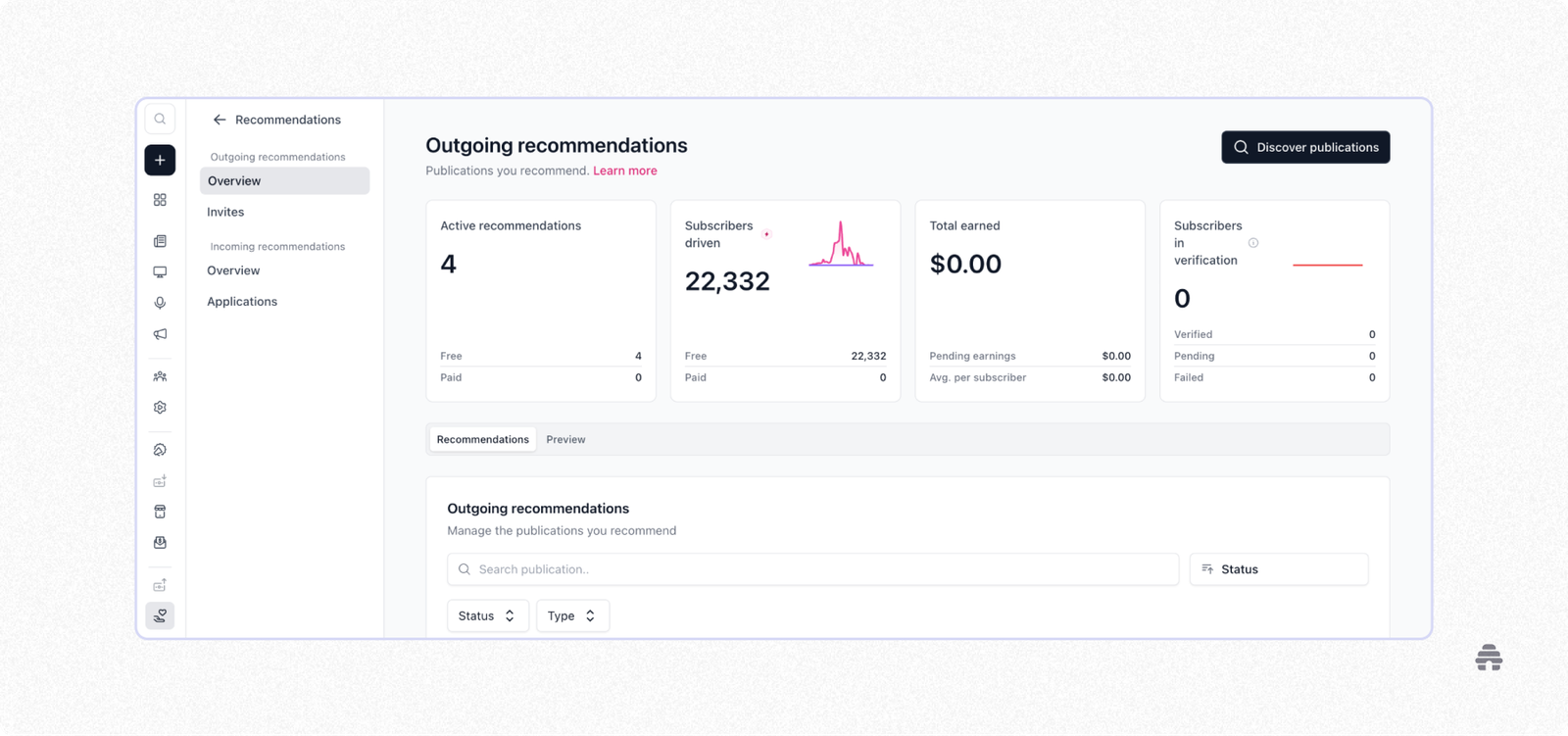
That structure explains why beehiiv is often attractive to publishers who want several newsletter-specific growth and monetization tools in one place rather than assembling separate products.
The trade-off is focus. beehiiv is designed around newsletter publishing and growth, not around complex CRM workflows, lead scoring, or broad ecommerce automation. If your newsletter eventually becomes one part of a more complicated customer journey, you may need another system alongside it.
Consider beehiiv if: growth loops, recommendations, sponsorships, and newsletter monetization are central to the plan.
Look elsewhere if: you need the newsletter deeply connected to sales pipelines, CRM logic, or advanced cross-channel automation.
Kit: Better Fit When the Newsletter Supports a Creator Business
Kit sits in a different category.
Its free plan currently supports up to 10,000 subscribers, with unlimited broadcasts, forms, landing pages, tagging and segmentation, digital products and subscriptions, and access to the Creator Network. Visual Automations and email sequences require a paid Creator or Creator Pro plan.
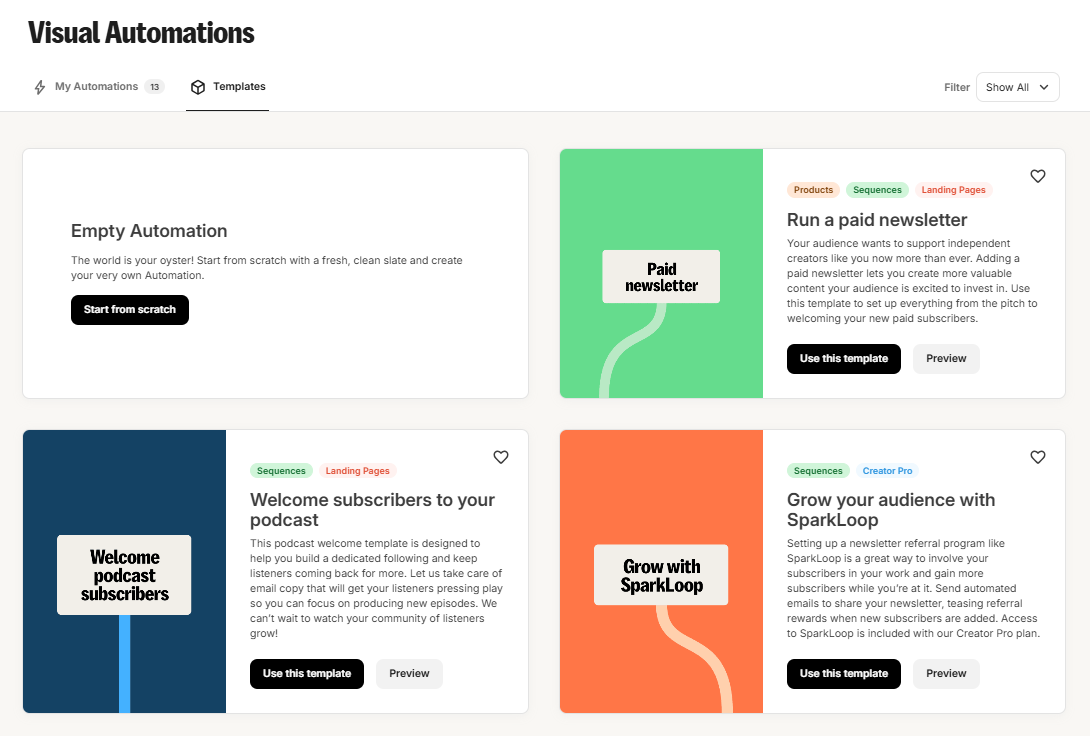
That distinction matters. Kit is strongest when a subscriber joining a newsletter is the beginning of a workflow rather than the end of it.
A creator selling a course, membership, digital download, or paid newsletter can connect subscriber tags, sequences, products, and automation in one system. That is more than a newsletter-first publisher may need, but it is useful when email is tied directly to revenue flows.
The cost is complexity. If you only want to write and send one publication every week, the automation layer may not add enough value to justify using a broader creator-marketing platform.
Consider Kit if: the newsletter feeds product launches, courses, paid content, or automated creator funnels.
Look elsewhere if: your main priority is publishing simplicity or platform-native newsletter discovery.
Substack: The Lowest-Friction Publishing Model
Substack removes much of the setup work associated with starting a newsletter.
Publishing is free regardless of list size. If you turn on paid subscriptions, Substack currently takes 10% of each paid transaction, with Stripe processing and billing fees applying separately.
That model creates a clear trade-off.
At the beginning, there is no software subscription to justify. You can publish, build an audience, and use Substack’s app, recommendations, and broader reader network without assembling your own publishing stack.
As paid revenue grows, however, a percentage-based fee becomes more meaningful. Publishers also have less control over the surrounding product experience than they would with a system built around their own site.
Subscriber data is exportable as CSV, which reduces some lock-in concerns, but moving a mature publication still involves more than moving email addresses. Paid billing, archives, domain setup, and audience-discovery channels can all matter.
Consider Substack if: you value low setup friction and built-in discovery more than deep customization.
Look elsewhere if: you want to avoid percentage-based platform fees or need advanced automation and control.
Ghost: For Publishers Who Want the Publication to Be Theirs
Ghost is the strongest contrast to the “publish inside someone else’s network” model.
It combines a full publishing website with newsletters, memberships, paid subscriptions, custom themes, SEO tools, recommendations, and social-web distribution. On eligible Ghost(Pro) paid plans, Ghost charges 0% transaction fees on premium subscriptions; payment-processor fees still apply.
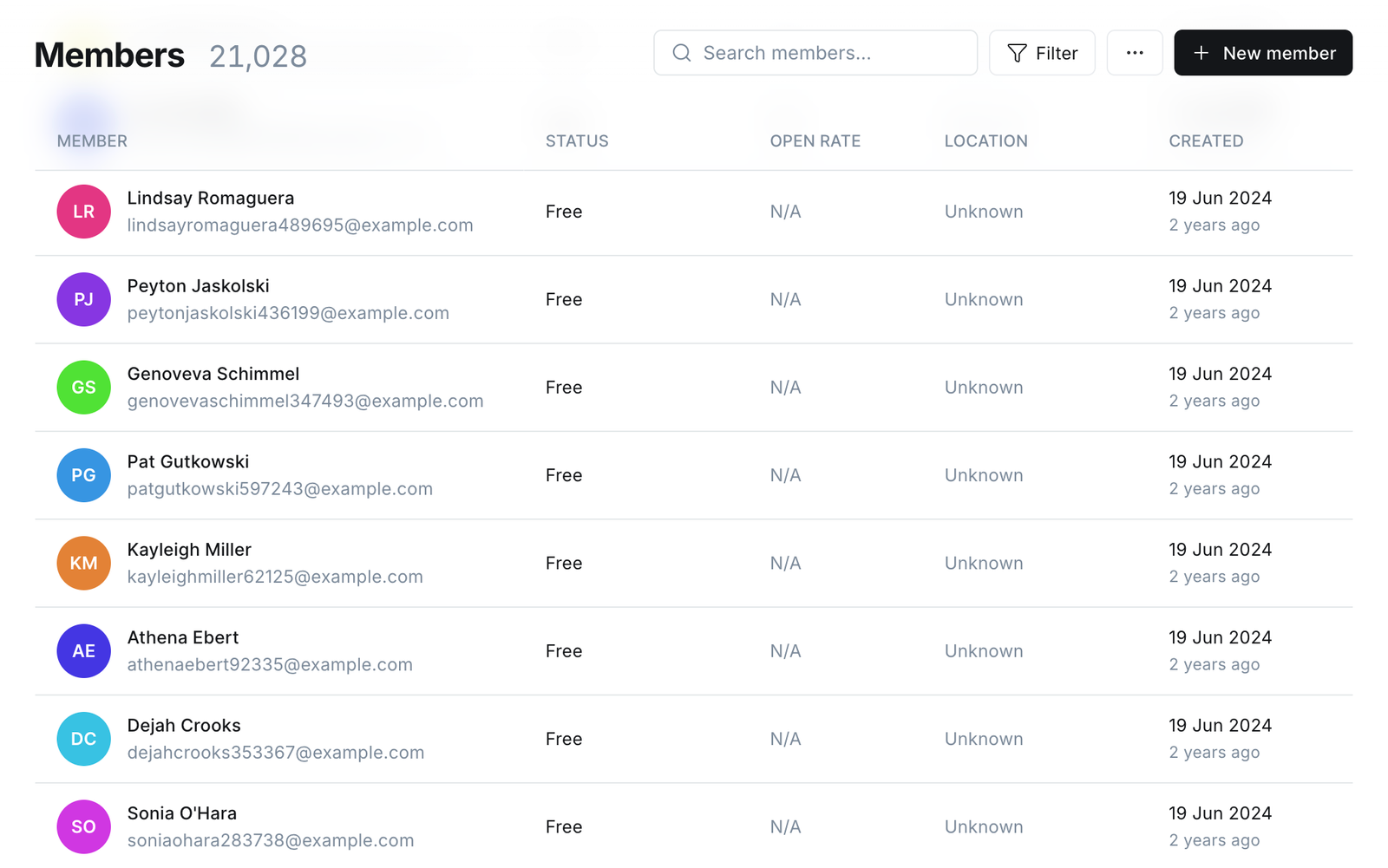
The important difference is not that Ghost automatically gives you better growth. It is that the publication, site structure, member experience, and monetization setup are more directly under your control.
That also creates more responsibility.
A publisher using Ghost needs to think more about site structure, design, acquisition, SEO, and distribution than someone who simply opens a Substack account and starts writing. Ghost does include discovery features such as Recommendations and Ghost Explore, but the broader model still leans more heavily on building an owned publication.
Consider Ghost if: ownership, site control, memberships, and long-term publishing infrastructure matter most.
Look elsewhere if: your priority is the fastest possible path from blank page to active newsletter with minimal setup decisions.
MailerLite: A Practical Middle Ground for Small Businesses
MailerLite makes more sense when the newsletter is one part of regular small-business email marketing.
Its current Free plan supports up to 250 active subscribers and 2,500 emails per month, with limited automations, forms, a landing page, a website, and a digital product or booking. MailerLite’s 2026 paid structure uses Comfort and Power plans rather than its older Growing Business and Advanced naming.
The appeal here is not a specialized newsletter network. It is that campaigns, signup forms, landing pages, subscriber management, and automation live in a relatively approachable email-marketing environment.
That matches a recurring theme in recent public user reviews: ease of use is one of MailerLite’s most consistently praised attributes, while some users say more complex automation and reporting needs eventually expose limits.
This makes MailerLite a sensible option for a business that wants newsletters and ordinary email campaigns in the same system without jumping immediately to a heavier automation platform.
Consider MailerLite if: you run a small business and want newsletters, forms, landing pages, and moderate automation in one place.
Look elsewhere if: you want a creator-specific discovery network or highly complex behavioral automation.
Buttondown: Deliberately Smaller in Scope
Buttondown’s appeal is that it does not try to turn every newsletter into a marketing suite.
The first 100 subscribers are currently free. Its pricing model then scales with active subscribers, while features such as segmentation, paid subscriptions, analytics, and automations can be added separately. Buttondown says it takes no additional cut from paid-subscription revenue beyond payment-processor fees.
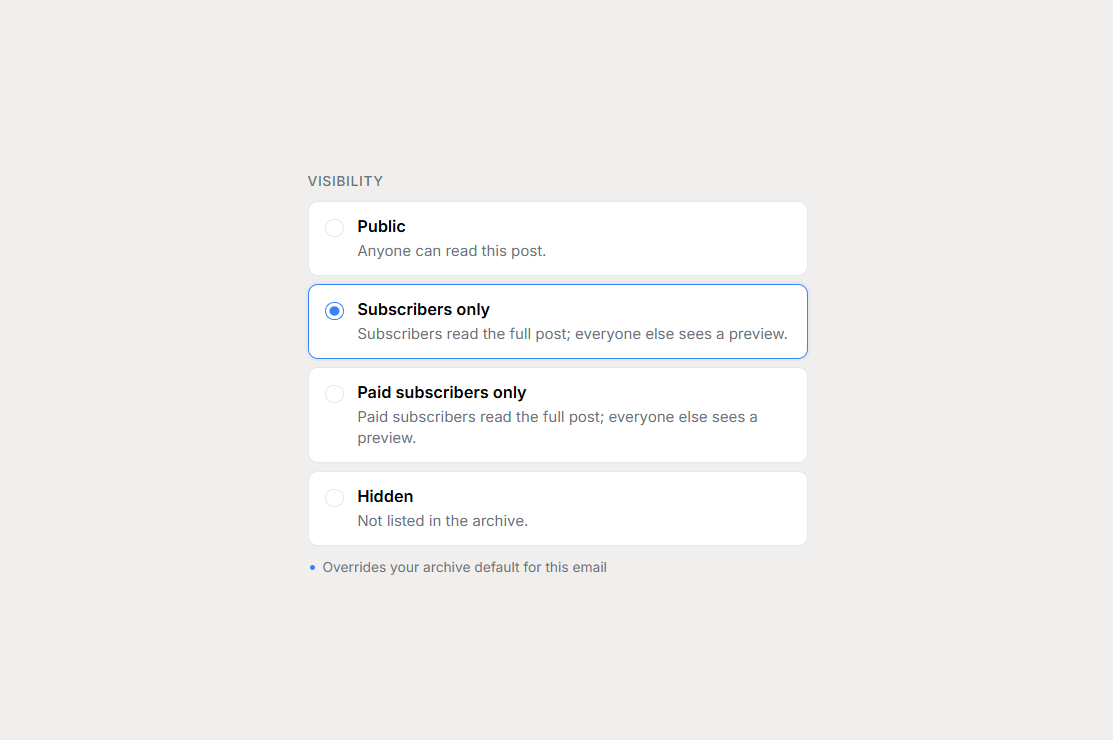
That à la carte model is useful for writers who know exactly what they need.
Public user reviews commonly describe the editor and setup as straightforward, while also noting that customization can feel limited unless you are comfortable doing more technical work yourself. That is a fair reflection of the product’s positioning: focused rather than expansive.
A writer who only needs publishing, a custom sending domain, archives, and a clean workflow may prefer this to paying for dozens of features they will never touch. A team that wants sophisticated funnels, visual automation, and an integrated growth ecosystem will probably reach Buttondown’s boundaries quickly.
Consider Buttondown if: you prefer a focused writer-first tool and want to add features selectively.
Look elsewhere if: you want a broad marketing platform or a built-in newsletter discovery ecosystem.
GetResponse: When the Newsletter Belongs Inside a Larger Marketing System
GetResponse is the opposite end of the spectrum from Buttondown.
Its current plans are Starter, Marketer, Creator, and Enterprise, with a free trial rather than a permanent long-term Free plan. Newsletters are available across the main paid tiers. Marketer adds more advanced automation and segmentation, while Creator adds features such as premium newsletters, courses, and webinars.
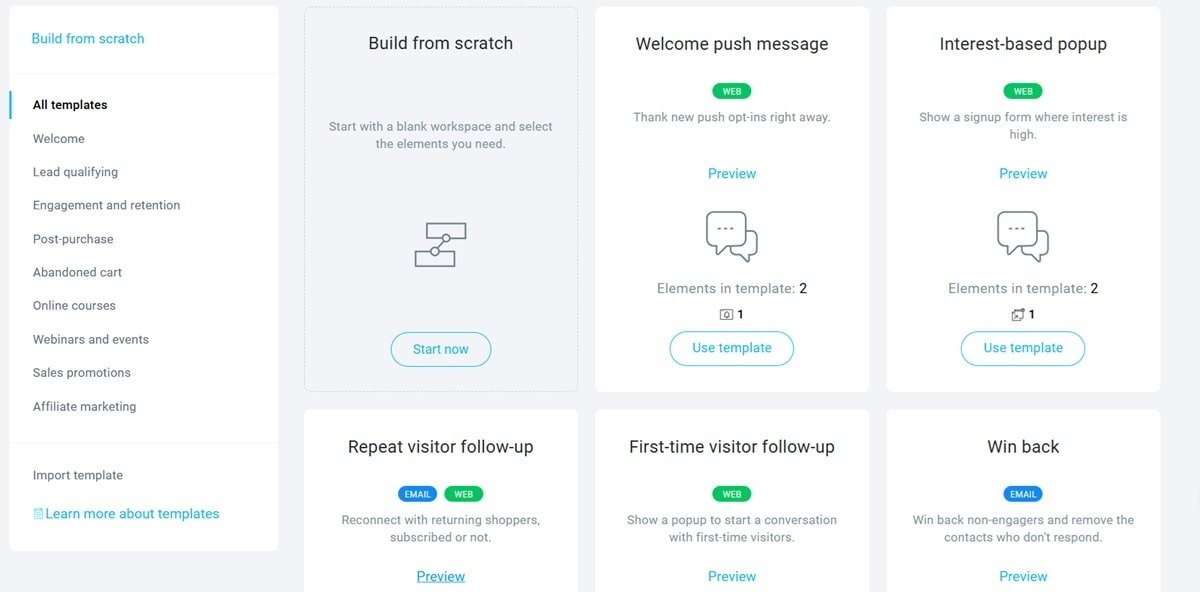
That breadth is useful when email has to connect to more than publishing.
A business can use newsletters alongside signup forms, landing pages, automation, funnels, ecommerce workflows, or creator products without stitching together as many separate tools.
The downside is exactly the same: there is more platform than a newsletter-only publisher may need. Recent public reviews often praise the breadth of GetResponse’s email and automation tooling while noting that more advanced capabilities sit on higher tiers and that the platform takes time to learn.
Consider GetResponse if: your newsletter is part of a broader marketing or creator system.
Look elsewhere if: you only need to publish a newsletter and want the simplest possible workflow.
Newsletter-First Platform or Email Marketing Software?
If you are still deciding between categories, start here.
Choose a newsletter-first platform when:
- the newsletter itself is becoming a product or publication
- paid subscriptions or sponsorships are part of the business model
- publishing speed matters more than advanced marketing logic
- audience discovery, recommendations, or reader-network effects are valuable
- you want the product experience centered on the publication itself
beehiiv, Substack, Ghost, and Buttondown all fit this broad category, but they solve it differently.
beehiiv emphasizes growth and monetization tools. Substack emphasizes ease and network discovery. Ghost emphasizes ownership and publishing infrastructure. Buttondown emphasizes a smaller, writer-first toolset.
Choose broader email-marketing software when:
- email supports an ecommerce store, course, service, or creator business
- subscriber behavior needs to trigger sequences or automations
- segmentation matters more than platform-native discovery
- forms, landing pages, funnels, or product sales need to live in the same system
- newsletters are only one type of campaign you send
Kit, MailerLite, and GetResponse fit this side of the decision.
Which Platform Fits Your Situation?
Rather than choosing an overall winner, narrow the field by the constraint that matters most.
You’re building a newsletter-first media business
Start with beehiiv, Ghost, and Substack.
beehiiv is worth evaluating when built-in growth and monetization tools matter. Ghost is stronger when ownership and site control are central. Substack is the simplest route when you value its network and want minimal setup.
You sell courses, memberships, or digital products
Start with Kit.
Its value becomes clearer when subscribers need to move through tags, sequences, automation, and product offers rather than simply receive broadcasts.
You want the least complicated publishing workflow
Compare Substack and Buttondown.
Substack gives you a built-in platform and reader network. Buttondown gives you a smaller standalone tool with more of an “email utility” feel.
You want control over the publication itself
Look closely at Ghost.
It requires more decisions than Substack, but those decisions come with more control over the website, membership model, design, and publishing infrastructure.
You’re a small business sending regular campaigns
MailerLite is a logical place to start evaluating.
It sits between newsletter tools and heavier marketing platforms, covering common business-email needs without making automation the entire product.
Automation is the deciding factor
Compare Kit and GetResponse.
Kit is oriented toward creator-led businesses. GetResponse reaches further into broader marketing, ecommerce, funnels, webinars, and creator tools.
Before You Switch Newsletter Platforms
Platform migration gets harder once your publication has a large archive, paid members, and several growth channels.
Before switching, check five things.
1. What exactly can you export?
Subscriber email addresses are the minimum. Also check whether tags, statuses, custom fields, engagement data, and paid-member information move cleanly.
2. What happens to paid subscribers?
Do not assume billing relationships move automatically. Verify how the old and new platforms handle Stripe or other payment infrastructure before starting the migration.
3. What happens to your archive and domain?
If your newsletter has years of indexed posts, changing platform architecture can affect URLs, redirects, and organic traffic.
4. Are your growth channels portable?
A recommendation or discovery network may stop helping the moment you leave that platform. Separate growth you truly own — search traffic, direct referrals, subscriber exports — from growth that depends on the platform ecosystem.
5. What will the platform cost at your next list size?
Do the math at the audience size you expect to reach, not just the size you have today. Subscriber tiers, add-ons, revenue share, and feature upgrades can change the economics dramatically.
Frequently Asked Questions
What is the difference between newsletter software and email marketing software?
Newsletter-first software centers on publishing, audience growth, subscriptions, and the publication itself. Broader email-marketing software is built around campaigns, automation, segmentation, lead nurturing, and other marketing workflows, with newsletters as one use case.
Which newsletter platforms support paid subscriptions?
Among the platforms in this guide, beehiiv, Substack, Ghost, Kit, and Buttondown all support paid-subscription or paid-newsletter workflows. Their economics differ: some charge software fees, some use add-ons, and Substack currently takes 10% of paid transactions. Always check current terms before choosing based on monetization alone.
Can I move my subscriber list to another newsletter platform?
Usually, yes. Most platforms provide subscriber-export tools. What may not transfer cleanly are automations, archives, custom fields, recommendation-network benefits, and payment relationships for paid subscribers.
What should I look for in newsletter software?
Start with the business model rather than the editor. Decide whether the newsletter is the product or a marketing channel, then compare growth tools, monetization, automation, audience portability, and how pricing changes as your list grows.
Which newsletter platform is easiest for beginners?
There is no universal beginner option. Substack minimizes setup, Buttondown keeps the workflow intentionally small, MailerLite is approachable for ordinary business email, and Kit gives creators more room to grow into automation. The right starting point depends on what you expect to need next.
Final Thoughts
The most useful way to choose a newsletter platform in 2026 is not to ask which product has the longest feature list.
Ask three questions instead:
- Is the newsletter the product, or is it supporting another business?
- Do you care more about platform-driven discovery, automation, or ownership?
- How will the economics change once your audience grows?
If the newsletter itself is the business, start with newsletter-first tools and compare their growth, ownership, and monetization models.
If the newsletter supports products, customers, or a larger marketing system, start with creator-focused or broader email-marketing platforms and compare automation depth.
That framework will narrow the field faster than any universal “best overall” label — and it makes it easier to choose a platform that still fits when the newsletter is much larger than it is today.
Comments
2 responses to “Best Newsletter Platforms in 2026”
[…] Alternatives can cover the migration and alternative context. For newsletter-first use cases, Best Newsletter Platforms in 2026 is the better […]
[…] If you mainly publish a newsletter, you may not need automation software at all. See our guide to Best Newsletter Platforms in 2026. […]