
Draft-final for WordPress draft | Fact-check date: September 28, 2026
Ecommerce email software earns its place by what happens after a shopper lands on your store. The useful platforms can pull in store and customer data, react to browsing or purchase behavior, trigger lifecycle messages, and connect at least some of that activity back to revenue.
That makes the buying decision different from choosing a newsletter tool. A small store running a few campaigns does not need the same system as a DTC brand building multi-step post-purchase and win-back flows. The shortlist below is organized around the constraint that matters most to the store—not around a universal winner.
Data note: Pricing and plan rules in this draft were rechecked against current vendor information on September 28, 2026. Because vendors change plans frequently, run one final live-data check immediately before publication.
Start With Your Store Constraint
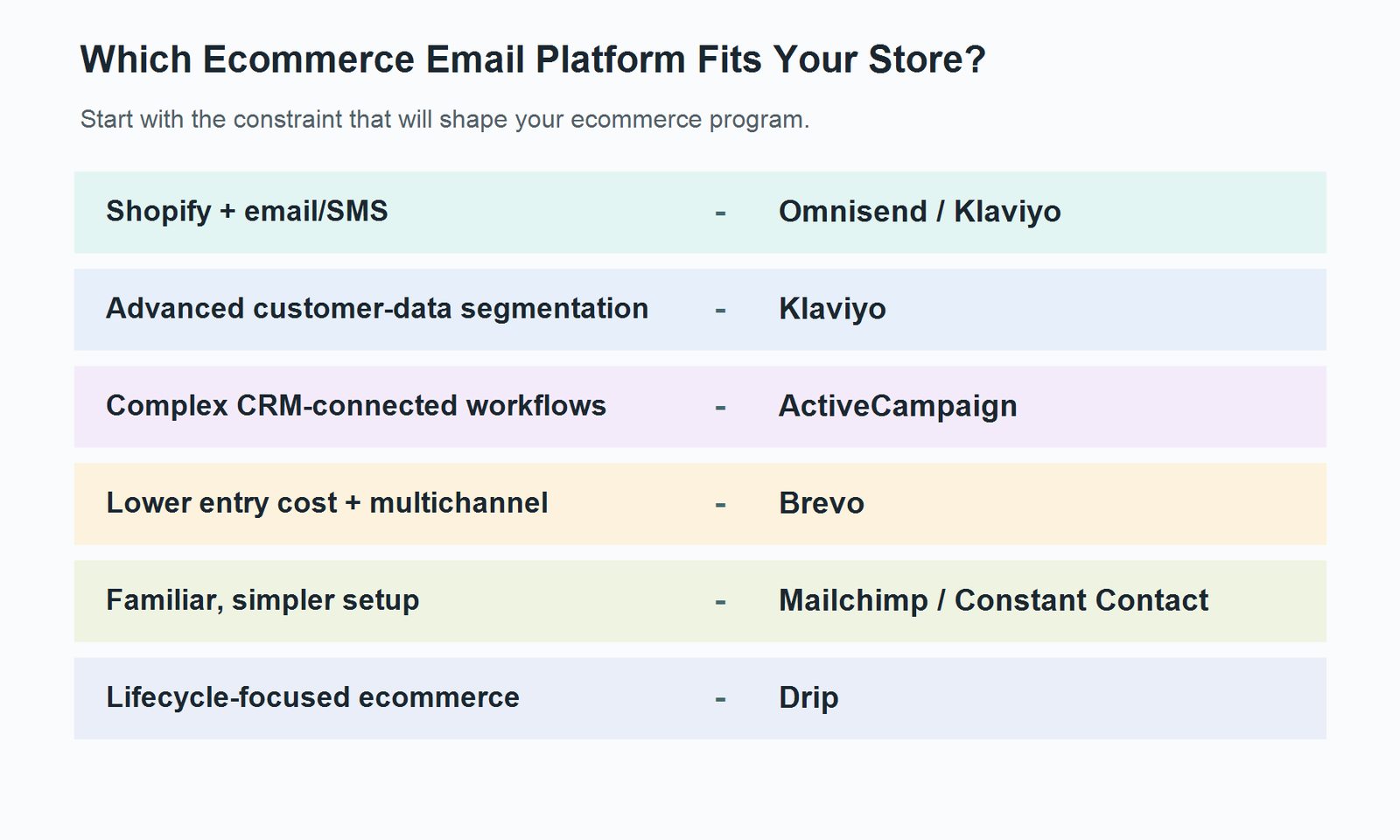
Use this as a first-pass filter, not a ranking.
| Your main constraint | Start with | Why it belongs on the shortlist |
| Shopify + email/SMS in one ecommerce-focused workflow | Omnisend / Klaviyo | Both are ecommerce-focused; the tradeoff is operating simplicity versus deeper segmentation/data use |
| Advanced customer-data segmentation and lifecycle logic | Klaviyo | Strong emphasis on store data, segmentation, flows, and revenue reporting |
| Complex CRM-connected or heavily branched automations | ActiveCampaign | Broader automation and CRM logic than most ecommerce-first tools |
| Lower entry cost with multiple channels | Brevo | Low entry pricing plus email, SMS, and other channels |
| Familiar setup for a smaller store | Mailchimp / Constant Contact | Lower operational learning burden for teams that do not need maximum automation depth |
| Repeat-purchase and lifecycle automation | Drip | Ecommerce workflows are organized around customer behavior and lifecycle stages |
Compare the 7 Ecommerce Email Platforms
Use the table to eliminate tools that clearly do not match your stack or operating model. Pricing is entry-level and should be treated as a starting point rather than the likely cost of a growing store.
EmailMarketingChoice.com — Article Draft
| Platform | Best For | Shopify | WooCommerce | Automation | SMS | Revenue Attribution / Reporting | Starting Price / Trial | Main Tradeoff |
| Klaviyo | Data-driven DTC and scaling ecommerce teams | Supported | Supported | Strong ecommerce flows and segmentation | Available | Built-in campaign revenue attribution | Free to 250 active profiles / 500 emails; paid pricing scales with profiles and sends | Depth and list growth can create both cost and management overhead |
| Omnisend | Ecommerce teams that want email + SMS with a simpler operating model | Supported | Supported | Ecommerce automations and prebuilt workflows | Current new subscribers need Pro; SMS is separately metered | Ecommerce campaign / automation reporting | Free to 250 contacts / 500 emails; Standard from $16/mo; Pro from $59/mo | Advanced branching, reporting depth, and customization can become constraints |
| ActiveCampaign | Complex automation and CRM-connected workflows | Standard ecommerce integration | Standard ecommerce integration | Multi-step automation; deeper capability depends on plan | Add-on | Ecommerce reporting; deeper attribution features are plan-dependent | Starter from $15/mo for 1,000 contacts; 14-day trial; no free plan | Flexibility requires more build and maintenance effort |
| Brevo | Lower-entry-cost multichannel marketing | Supported through ecommerce integrations/plugins | Supported through ecommerce integrations/plugins | Marketing automation, with higher limits/features on paid plans | Available via credits | Ecommerce revenue dashboard in supported setups | Free; Starter from $9/mo; Standard from $18/mo | Less ecommerce-native than tools built around store behavior; some ecommerce reporting has setup limits |
| Mailchimp | Familiar, simpler ecommerce setups | Supported | Supported | Marketing Automation Flows; depth varies by plan | Paid-plan add-on; not on Free | Ecommerce / attributable revenue reporting in supported integrations | Free to 250 contacts / 500 sends; paid pricing varies by plan and contact count | General marketing breadth can be more than some stores need while advanced lifecycle use may push you up-plan |
| Drip | Lifecycle-focused ecommerce automation | Native integration | Native integration | Ecommerce behavior-based workflows | Not a primary strength | Revenue attribution with configurable window | $39/mo for up to 2,500 people; 14-day trial; no free plan | Narrower fit if you want a broad multichannel marketing suite |
| Constant Contact | Small stores prioritizing simplicity and support | Supported | Supported | Ecommerce automation available; deeper paths depend on plan | Add-on on Lite/Standard; included allocation on Premium | Ecommerce sales/revenue tracking in supported integrations | Lite from $12/mo; free trial available | Advanced segmentation and deeply customized lifecycle logic are less flexible than specialist tools |
The Platforms, Reviewed by Store Fit
Klaviyo: when customer data becomes the operating system
Klaviyo becomes interesting when a store no longer wants to treat every subscriber the same. Its ecommerce value comes from combining store activity with segmentation and flows: purchase behavior, customer attributes, campaign activity, and lifecycle events can all become inputs to who gets what message and when.
For a growing DTC brand, that depth matters when the email program starts branching. First-time buyers may need a different post-purchase path from repeat customers. High-value customers can be segmented differently from discount-driven buyers. Revenue reporting can then help connect campaigns and flows back to orders rather than stopping at clicks.
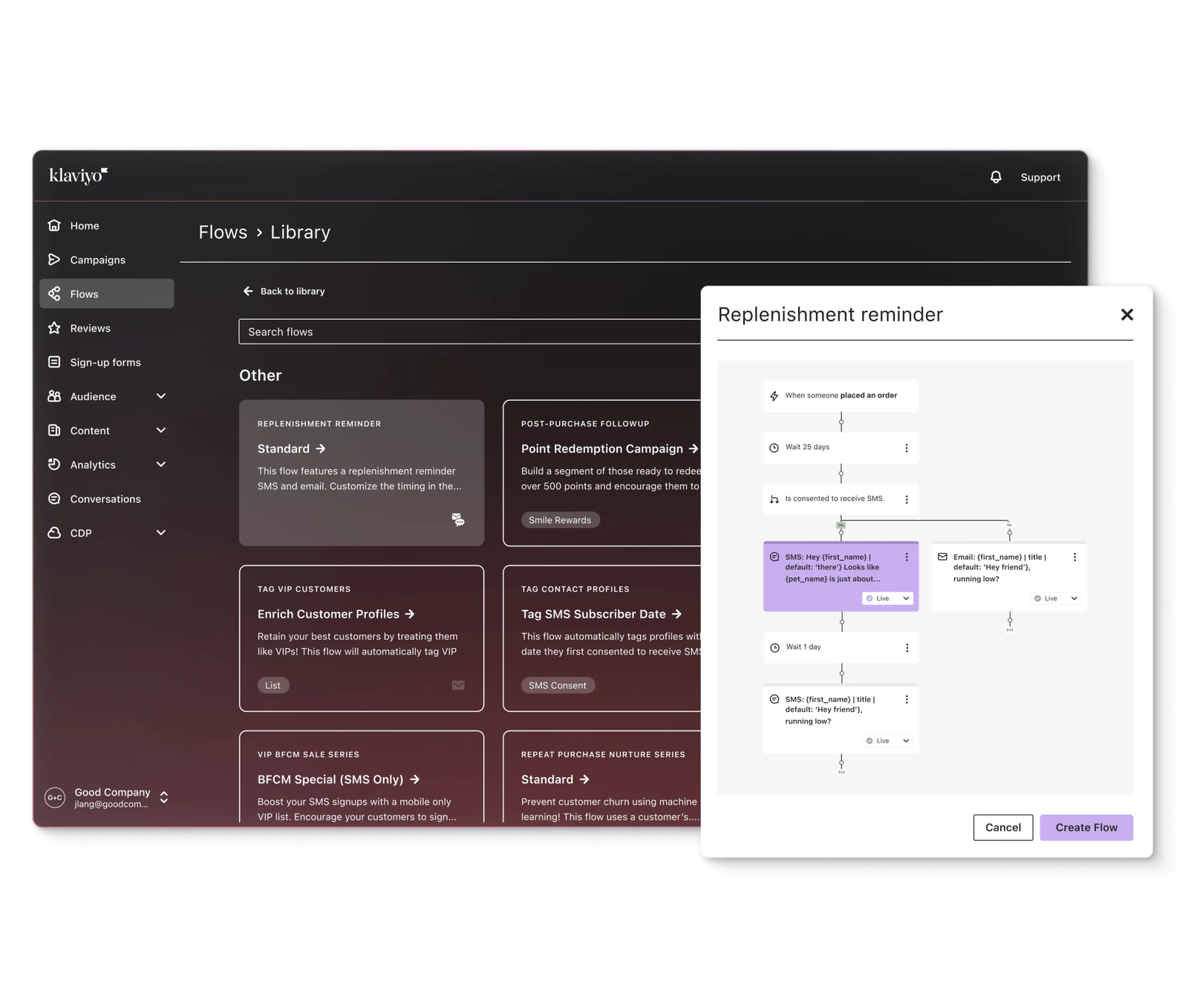
The tradeoff is that the same depth has to be operated. In our user-feedback sample, segmentation and automation were among the most frequently praised themes, while pricing was one of the most common negative themes. A store with a growing list should therefore model the software cost against the revenue those deeper flows are actually generating.
Where it makes the most sense: a DTC or Shopify-centered brand with repeat-purchase potential and someone who will actively maintain segments and automations.
Skip it if: you mainly send promotions plus a few standard flows and are unlikely to use advanced segmentation or customer-data logic. In that case, the extra depth can add cost faster than it adds value.
Omnisend: easier ecommerce operations, with a sharper SMS caveat in 2026
Omnisend sits close to Klaviyo in the ecommerce shortlist, but the operating feel is different. Its appeal is getting common ecommerce workflows running without making the marketing stack feel like a separate software project.
That makes it especially relevant to Shopify-centered teams that want campaigns, automations, and SMS in one environment. There is an important 2026 pricing change, though: for new subscribers from May 4, 2026 onward, SMS is available on Pro rather than Free or Standard, and SMS usage is purchased separately on a volume basis. That makes “email + SMS in one place” a valid capability, but not a reason to assume SMS is bundled into the lower plans.
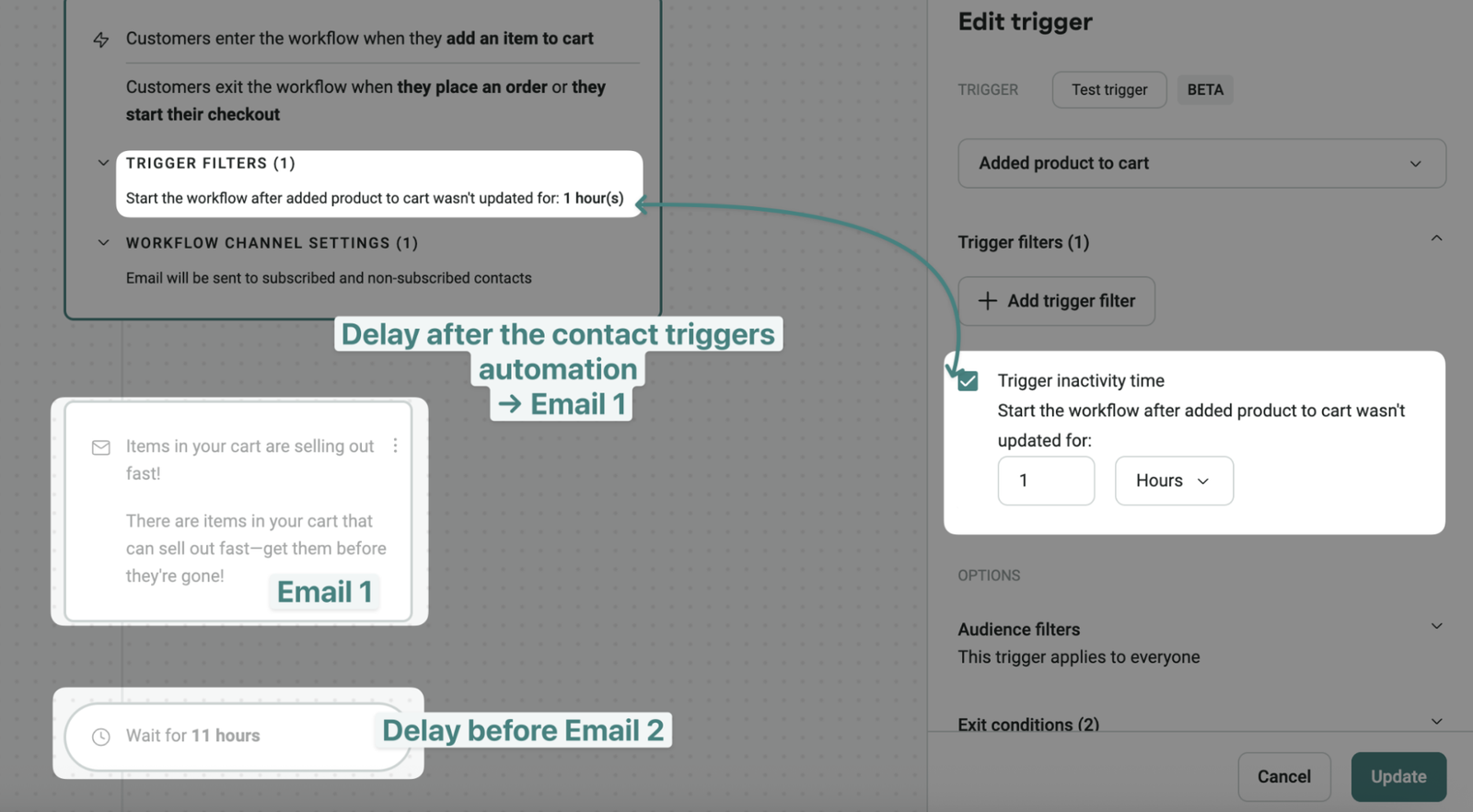
Our VOC sample also sharpened the real tradeoff. Ease of use was one of the strongest recurring positive themes, while limitations appeared around more complex automation, reporting depth, editor flexibility, and some integration scenarios.
Consider Omnisend if: you want an ecommerce-first workflow that is comparatively quick to operate and your automation needs still look like recognizable store journeys.
Skip it if: highly customized branching logic, deep reporting, or CRM-connected workflows are central to your marketing operation. That is where a broader automation platform may justify the extra complexity.
ActiveCampaign: when ecommerce turns into an automation problem
Some stores outgrow simple triggers before they outgrow email itself. If customer journeys branch across products, lead stages, sales follow-up, and non-store systems, the limiting factor stops being “does this tool have an abandoned-cart template?” and becomes “can the workflow model the business?”
That is where ActiveCampaign belongs on the shortlist. Its current ecommerce support includes standard integrations for Shopify and WooCommerce, while BigCommerce and Shopify Plus sit in the premium integration tier. It also supports abandoned cart, product catalog/blocks, coupons, and ecommerce reporting.
The cost is operational. Starter pricing begins at $15 per month for 1,000 contacts, but that plan limits automation actions and reporting compared with higher tiers. More complex automation is only useful if someone owns the logic and keeps it current as products, offers, and customer journeys change.
Good fit when: ecommerce email is connected to CRM-style processes or the business needs automation that reaches well beyond standard store flows.
Skip it if: you want a handful of ecommerce automations running quickly and nobody on the team wants to maintain complex workflow logic.
Brevo: lower entry price, but check how ecommerce-native you need the stack to be
Brevo is attractive when the budget conversation happens early and the team still wants more than email. The current Free plan allows 300 emails per day, Starter begins at $9 per month, and Standard at $18. SMS is available through prepaid credits rather than being tied to one simple all-inclusive email plan.
That low entry point should not be confused with “the cheapest at every size.” What matters is whether Brevo’s ecommerce model matches the store. It can support ecommerce data and revenue analysis, but its ecommerce dashboard depends on supported plugin/API setups and has constraints that ecommerce-native platforms may not.
For a smaller store, that can be a perfectly reasonable trade: pay less at the entry point and avoid buying depth you do not need.
The strongest fit is: a cost-sensitive small business or mixed-stack store that wants email plus other channels without starting at a high monthly software cost.
Skip it if: deeply ecommerce-native store-data workflows, multiple-store analytics, or advanced product-level automation are central to the program.
Which Platform Fits Your Store Stage?
Software requirements change as the store changes.
Just starting: Mailchimp, Brevo, and Constant Contact deserve the first look. The main question is whether you value familiarity, lower entry pricing, or more guided small-business tooling.
Growing Shopify store: compare Omnisend and Klaviyo early. Omnisend is the simpler operating model in our VOC sample; Klaviyo earns the comparison when segmentation and data depth start to matter.
Scaling DTC brand: Klaviyo becomes more compelling when repeat purchase, customer lifetime value, and differentiated lifecycle logic are already business priorities.
Complex automation: ActiveCampaign makes more sense when customer journeys extend into CRM-style processes or require heavy branching.
Lifecycle-led ecommerce: Drip deserves a direct look when welcome, purchase, repeat purchase, and win-back flows are the center of the retention strategy.
These stages overlap. A lean Shopify team can have sophisticated revenue goals but limited time to maintain automations, which is why the tradeoff matters more than the label.
Three More Options for Simpler or Lifecycle-Focused Stores
Mailchimp: familiar first, ecommerce-capable second
Mailchimp is often the least intimidating transition for a team that already knows its campaign editor or has used it for newsletters. Its current Free plan supports up to 250 contacts and 500 monthly sends, while paid plans add more automation depth. SMS is available only as an add-on to paid marketing plans.
Mailchimp also has more ecommerce capability than the “newsletter tool” stereotype suggests. Supported store integrations can feed purchase behavior into segmentation and automations, and higher plans add more advanced marketing flows.
That does not automatically make it the right long-term lifecycle platform. The question is whether the store will eventually need highly specialized ecommerce data logic or simply a familiar system that handles campaigns and standard automations reliably.
If you’re already using Mailchimp and considering a move, Mailchimp Alternatives can cover the migration and alternative context. For newsletter-first use cases, Best Newsletter Platforms in 2026 is the better comparison.
A sensible fit when: a small store wants a familiar interface, standard ecommerce automations, and room to grow without adopting a specialist platform immediately.
Skip it if: advanced lifecycle segmentation and highly ecommerce-specific automation are already requirements rather than future possibilities.
Drip: organize the program around the customer lifecycle
Drip’s ecommerce story is unusually direct: Shopify, WooCommerce, and BigCommerce are native integrations, and the product is built around behavior-based automation for B2C businesses that sell online.
That means the useful question is not whether Drip can send a newsletter. It is whether the store wants to organize retention around customer behavior—welcome, cart recovery, first purchase, post-purchase, repeat purchase, and win-back.
Drip currently starts at $39 per month for up to 2,500 people and offers a 14-day trial rather than a permanent free plan. Revenue attribution is also part of the ecommerce decision layer rather than an afterthought.
Where it makes the most sense: a store with a clear repeat-purchase strategy that wants email automation tied closely to lifecycle behavior.
Skip it if: SMS or a broad all-in-one multichannel suite is a primary requirement. Drip’s own current positioning makes email-led B2C automation the center of gravity.
Constant Contact: simpler operations for an owner-led store
Constant Contact is worth considering when the person doing email is also doing five other jobs. The current Lite plan starts at $12 per month, and the platform offers a free trial. Shopify and WooCommerce can feed ecommerce customer activity into automation paths, including welcome, purchase follow-up, review requests, and re-engagement-style journeys.
SMS is available as an add-on on lower plans, while deeper automation and segmentation increase as you move up the plan ladder.
The key tradeoff is not that Constant Contact “cannot do ecommerce.” It can. The limitation is how far you want to push segmentation and lifecycle logic before a more specialized platform becomes easier to justify.
This becomes interesting when: a small store values guided setup, support, and an approachable interface more than maximum workflow flexibility.
Skip it if: advanced segmentation, highly branched lifecycle automation, or granular ecommerce data logic are already core operating requirements.
The Automations That Actually Matter for Ecommerce
Feature checklists blur together quickly. Workflows are more useful because they reveal whether the platform can react to the customer journey your store actually has.
Before buying, mark each workflow as native, integration-dependent, limited by plan, or unavailable for the exact store platform and plan you would use.
Welcome: Can the flow branch by signup source, purchase status, or customer segment?
Browse abandonment: Does the store integration pass product-view events, and is the workflow available on your plan?
Cart abandonment: Can the message render real cart contents, and are follow-ups limited by plan or workflow rules?
Post-purchase: Can it branch by product, order value, or first-time versus repeat purchase?
Cross-sell: Are product recommendations native, catalog-driven, or dependent on another tool?
Review request: Does the platform trigger this itself or depend on a review-app integration?
Win-back: How flexibly can you define a lapsed customer?
Back-in-stock: Is inventory data native to the integration or dependent on an add-on?
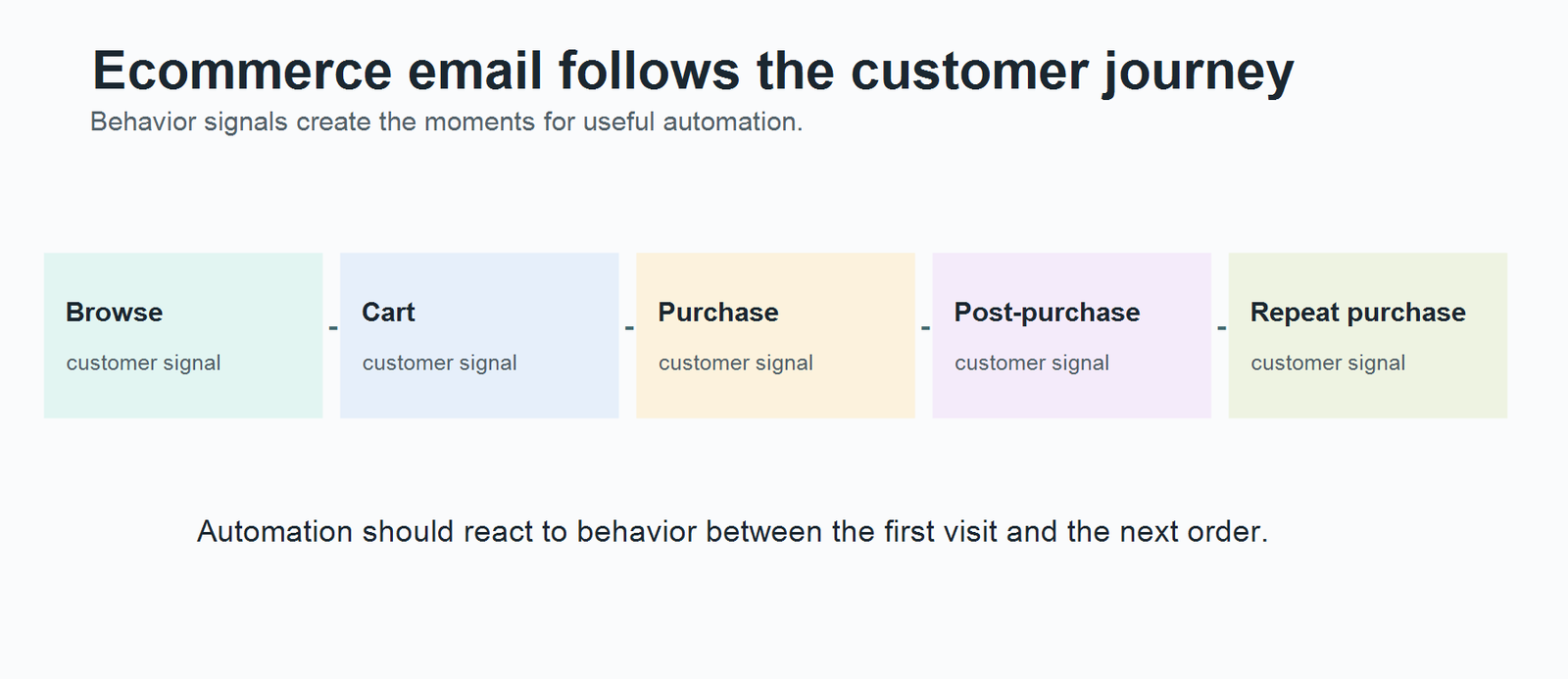
This is the practical dividing line between a newsletter-capable platform and a serious ecommerce automation system. The latter needs to react to shopper behavior between the first browse and the next purchase.
Use These 5 Questions to Eliminate the Wrong Tools
1. What store data must move into the platform?
Do not stop at “Shopify integration: yes.” Check whether the integration syncs products, orders, customer behavior, and the events required by your automations. A shallow contact sync can technically count as an integration while still blocking the workflows you actually want.
2. Which revenue workflows must run without manual work?
List the flows that materially affect the store: cart recovery, post-purchase, cross-sell, win-back, back-in-stock. Then confirm those flows at the exact plan level you would buy.
3. Does SMS belong inside the same automation?
If SMS is part of the roadmap, check both capability and billing. Omnisend’s 2026 plan change is a good example: SMS is available, but new subscribers need Pro and then pay for SMS usage separately. Mailchimp also treats SMS as a paid-plan add-on.
4. What happens to the bill when the list doubles?
Model the cost at today’s list size, then at 2x and 5x. Contact-based platforms can become expensive for a store whose list grows faster than revenue. Send-based pricing can behave differently. Entry price alone is not enough.
5. Who will maintain the automation?
A more capable platform is not automatically more valuable. If nobody on the team will maintain branching logic, segments, exclusions, and lifecycle rules, a simpler platform used well can outperform a deeper platform used superficially.
What Ecommerce Users Say About Klaviyo vs Omnisend
Feature pages explain what software can do. User feedback is more useful for understanding what becomes easy, expensive, frustrating, or valuable after the tool is actually in use.
For this article, we reviewed a small exploratory sample of 20 public user reviews and discussions: 10 relating to Klaviyo and 10 to Omnisend. We de-identified the feedback and tagged recurring themes relevant to ecommerce software selection.
This is not a representative survey. It reflects the people who chose to post publicly, so the counts below should be read as directional evidence within this sample—not as percentages of all Klaviyo or Omnisend customers.
What appeared most often in the sample
| Theme | Klaviyo tagged mentions | Omnisend tagged mentions |
| Automation | 6 | 4 |
| Segmentation | 8 | 1 |
| Ease of use | 5 | 5 |
| Pricing | 6 | 4 |
| Integrations / store data | 4 | 4 |
| Reporting | 4 | 3 |
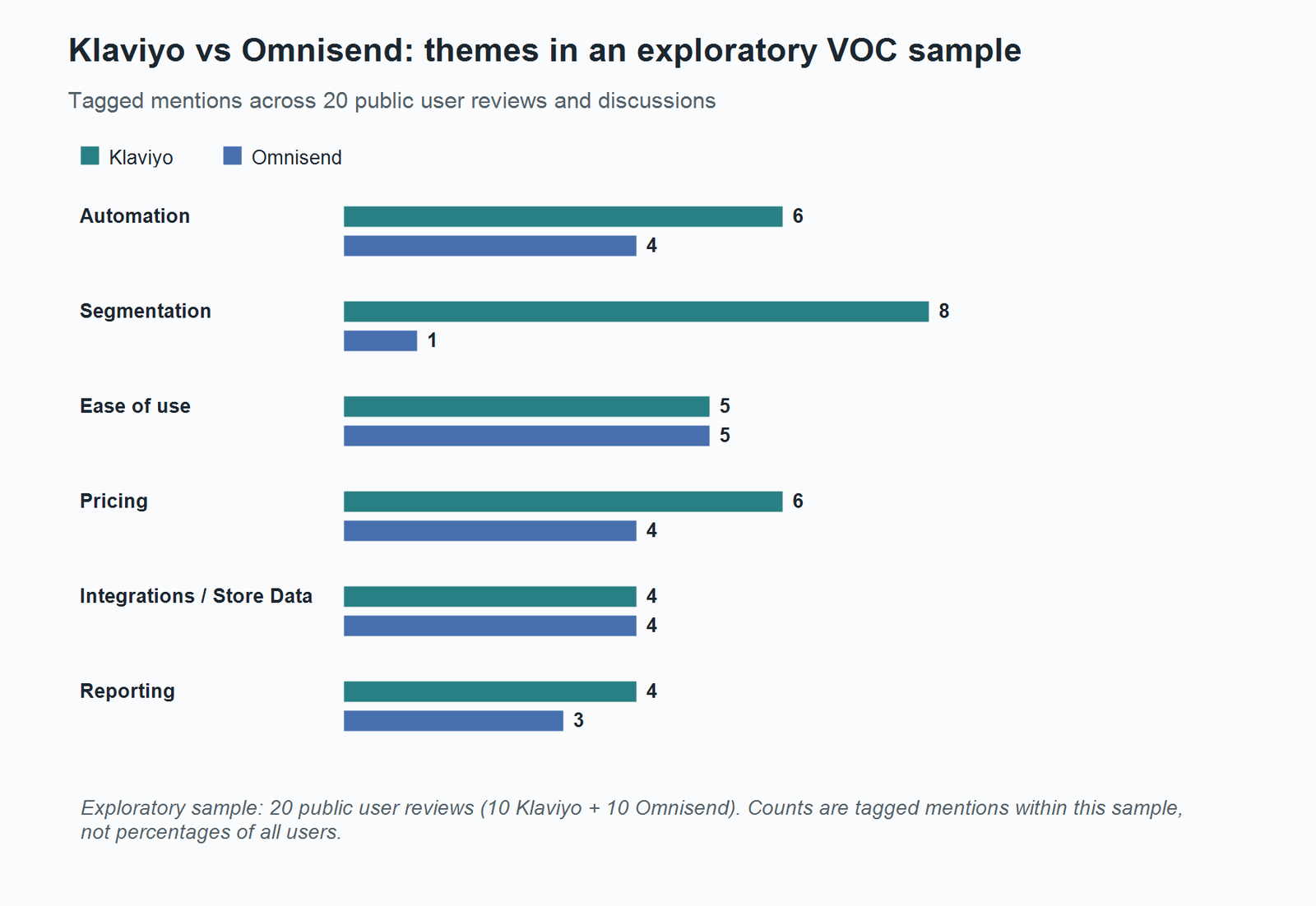
Exploratory VOC sample: 20 public reviews/discussions (10 Klaviyo, 10 Omnisend). Counts are tagged mentions within this sample, not percentages of all users.
Klaviyo feedback clustered around depth
Segmentation was the strongest recurring theme in the Klaviyo sample, with automation also appearing frequently. Users valued the ability to work with detailed customer and store data and build more sophisticated lifecycle logic.
The cost side appeared just as clearly. Pricing was one of the most frequently mentioned negative themes, especially in the context of list growth. Ease-of-use feedback was mixed rather than uniformly negative: some users found the platform intuitive, while others described the depth as creating a learning curve.
The useful interpretation is not “Klaviyo is hard to use.” It is that depth creates both leverage and operating overhead.
Omnisend feedback clustered around accessibility
Ease of use was one of the strongest recurring Omnisend themes. Automation, integrations, pricing/value, and support also appeared repeatedly in the broader tagging work.
The limitations in the sample were more specific than “less powerful than Klaviyo.” They appeared around advanced branching, reporting depth, editor flexibility, and some integration scenarios. Support feedback was mostly positive in the sample but not uniform.
The useful interpretation is therefore not “Omnisend is basic.” It is that its operating simplicity is part of the product value, while advanced edge cases are where the tradeoff becomes more visible.
What the sample means for the Klaviyo vs Omnisend decision
The strongest distinction was depth versus operating simplicity, not “good versus bad.”
Choose Klaviyo first when sophisticated segmentation, customer-data use, and increasingly detailed lifecycle logic are likely to justify the additional cost and management effort.
Choose Omnisend first when the team wants an ecommerce-focused workflow that is quicker to operate, especially when standard store automations cover most of the retention program.
Treat that as a shortlist decision, not a universal verdict. Store size, team skill, SMS requirements, and pricing at the actual contact tier can still reverse the choice.
Build Your Two-Tool Shortlist
Do not leave this article with seven tabs open. Use the store’s main constraint to get down to two.
Shopify + ecommerce email/SMS: start with Klaviyo vs Omnisend. Compare Klaviyo’s data and segmentation depth against Omnisend’s simpler operating model, then price both at your real list size.
Complex CRM or multi-step automation: compare ActiveCampaign vs Klaviyo. The deciding question is whether the workflow extends beyond ecommerce lifecycle marketing into broader CRM logic.
Lower-entry-cost multichannel marketing: compare Brevo vs Mailchimp. Brevo has the lower current entry price; Mailchimp offers a familiar general-marketing environment with supported ecommerce automation.
Lifecycle-first ecommerce: compare Drip vs Klaviyo. Drip is more narrowly centered on B2C lifecycle automation, while Klaviyo offers deeper customer-data and segmentation tooling.
Simple owner-operated store: compare Mailchimp vs Constant Contact. The deciding factor is likely to be which interface, support model, integrations, and plan limits fit the person who will actually run the program.
The final choice should survive three checks before you migrate: the exact store integration passes the data your flows need, the workflows are available on the plan you can afford, and the cost still makes sense when the list grows.